
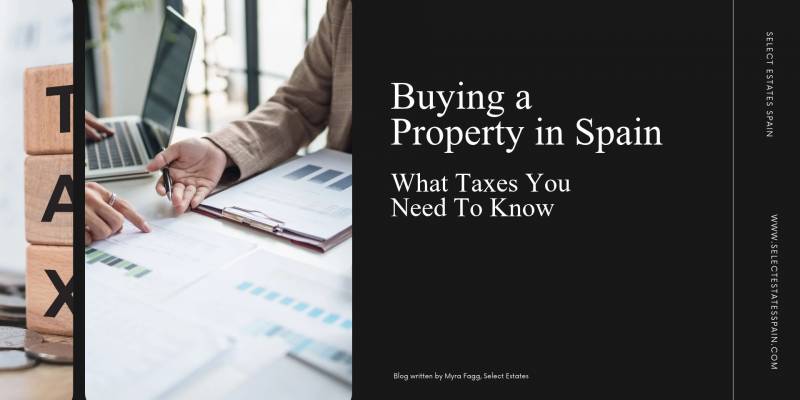
Buying a Property in Spain: What Taxes Do You Need to Know?
Buying a property on the Costa Blanca is an exciting investment, whether you are looking for a holiday home, a permanent residence or a place to enjoy the Spanish lifestyle.
Before purchasing, however, it is important to understand the taxes and additional costs involved. The amount you pay depends mainly on whether you are buying a new-build or resale property, where the property is located and your tax residency status.
In this guide, we explain the main property taxes you should know about when buying and owning a home in Spain.
1. Taxes When Buying a Property
The taxes you pay when purchasing a property in Spain depend on whether it is a new-build or an existing property.
Buying a resale property – ITP
When purchasing an existing property from a private seller, buyers generally pay Property Transfer Tax, known as Impuesto sobre Transmisiones Patrimoniales (ITP).
In the Valencian Community, which includes popular Costa Blanca locations such as Altea, Jávea, Calpe and Moraira, the general rate is currently:
- 9% for properties valued up to €1 million.
- 11% for properties valued above €1 million.
For example, on a resale property priced at €300,000, the general ITP would be €27,000.
Buying a new-build property – VAT and AJD
When purchasing a newly built home directly from a developer, buyers generally pay:
- 10% VAT (IVA).
- 1.4% Stamp Duty (AJD) in the Valencian Community.
-0,1 % when you are a fiscal resident and it is your main property
For a new-build property priced at €300,000, this would mean €30,000 in VAT and €4,200 in Stamp Duty when you are a non-resident.
These are general rates applicable in the Valencian Community from 1 June 2026. Reduced rates or different tax treatment may apply in certain circumstances. The taxable value should also be checked before completion.
2. Additional Costs of Buying a Property
Apart from taxes, buyers should budget for several additional costs when purchasing a property in Spain.
These may include notary fees, Land Registry fees and legal fees for an independent property lawyer. If you are purchasing with a mortgage, there may also be valuation and other financing-related costs.
The total amount will depend on the property and the transaction, so it is always advisable to request a personalised cost estimate before committing to a purchase.
3. Annual Property Taxes in Spain
Owning a property in Spain also comes with annual expenses.
IBI – Annual Property Tax
IBI (Impuesto sobre Bienes Inmuebles) is the local property tax paid to the municipality where your property is located. It is calculated using the cadastral value of the property and the rate set by the local council.
The amount varies between municipalities and individual properties.
Waste Collection Tax
Depending on the municipality, property owners may also pay an annual waste collection charge, commonly known as basura. The amount and payment arrangements vary by location.
4. Taxes for Residents and Non-Residents
Your tax residency status is another important consideration when owning property in Spain.
Spanish tax residents
If you become a Spanish tax resident, you will generally be subject to Spanish personal income tax rules on your worldwide income. Your annual income tax declaration is submitted using Modelo 100, where applicable.
Non-residents
If you own a property in Spain but remain tax resident in another country, you may still have Spanish tax obligations.
Even if you use the property exclusively as a holiday home and do not rent it out, you may be liable for Non-Resident Income Tax (Impuesto sobre la Renta de No Residentes).
This can involve declaring an imputed income through Modelo 210. The calculation depends on the property's cadastral value and the applicable tax rules.
The rules can vary depending on your circumstances and country of tax residence, so professional advice is recommended.
5. Planning Your Property Purchase
Understanding the taxes involved is an important part of buying a property in Spain. Looking beyond the asking price and calculating the additional purchase costs and annual expenses will help you plan your budget with confidence.
At Select Estates, we understand that buying a property abroad involves more than simply finding the right home. Our team can help you explore the Costa Blanca property market and guide you through the different stages of your property search.
We also recommend working with an independent Spanish lawyer and qualified tax adviser to ensure that all legal and tax aspects of your purchase are properly addressed.
Thinking about buying a property on the Costa Blanca?
Contact Select Estates and let us help you find your place in Spain.
Disclaimer: This article is for general information purposes only and does not constitute legal, financial or tax advice. Tax rates and regulations may change, and individual circumstances can affect the taxes payable. Always consult a qualified Spanish tax adviser or independent lawyer before purchasing a property.